
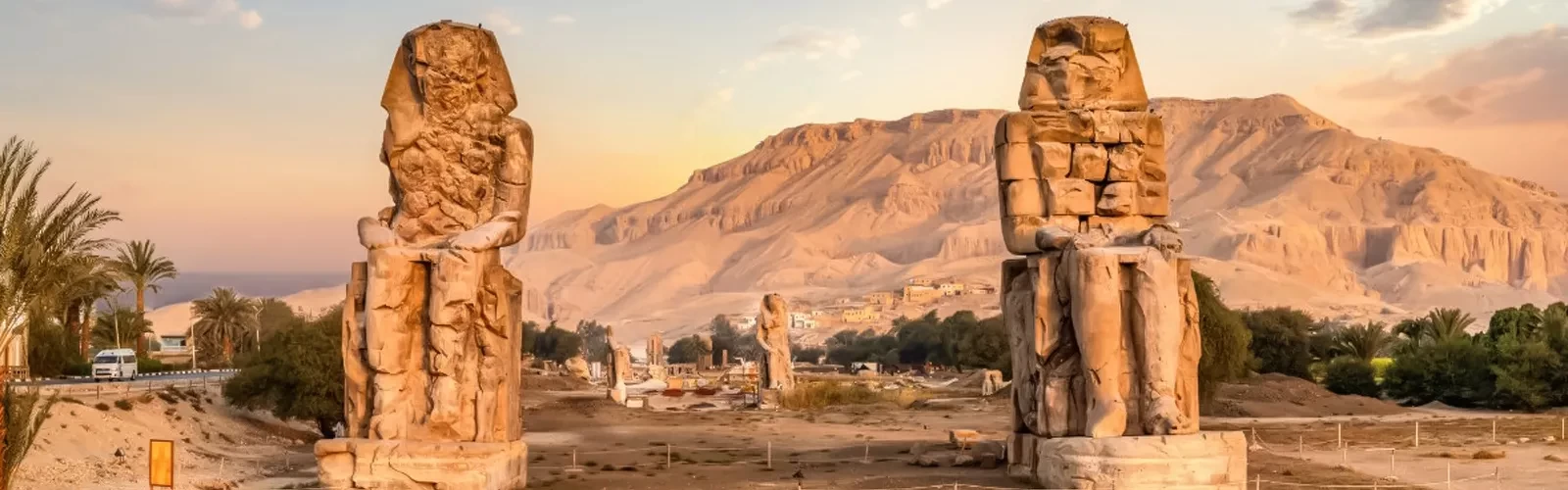
Colossi of Memnon: History & Facts
Step into the Memnon Colossi at Luxor on Egypt’s West Bank. These are two huge statues that have been there for thousands of years. In this guide, you will find their background and how they were built. You will also learn why they mattered to people long ago, and how they tie to Pharaoh Amenhotep III.This visitor guide also covers what to see and useful tips for planning your visit as part of Luxor tours.
Colossi of Memnon: History & Visitor Guide
The Colossi of Memnon are some of the best known old monuments in Luxor, Egypt. You will find them on the west bank of the Nile. Two huge stone statues stand there and have drawn travelers for ages. Many people stop here while they plan their time among temples and tombs in Luxor.
If this is your first trip to Egypt, or if you are on a guided tour in Luxor, these statues give a strong first look at ancient Thebes. They are an easy place to start because they are so well known and easy to spot.
What Are the Colossi of Memnon?
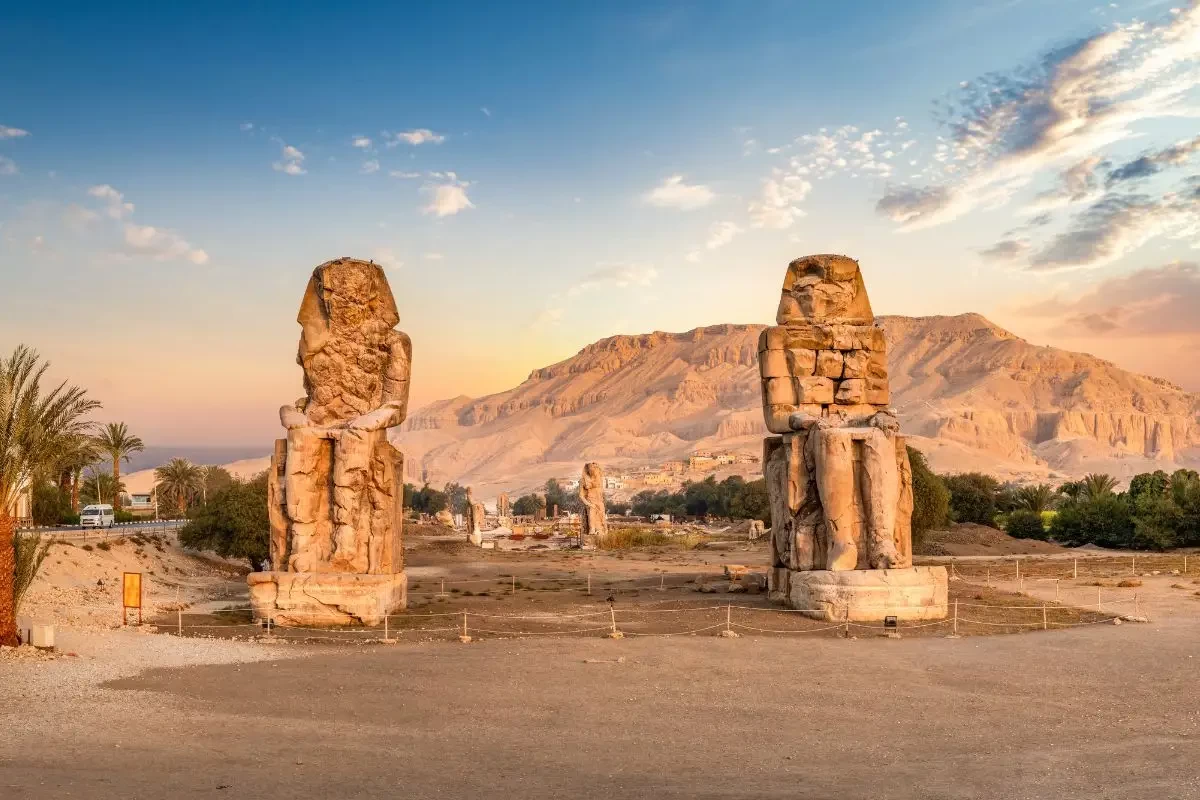
The Colossi of Memnon are two seated statues made for Pharaoh Amenhotep III. He belonged to Egypt’s 18th Dynasty. In both statues, the pharaoh sits on his throne. His body faces east, toward the Nile and the sunrise.
At first, the statues marked the entrance to Amenhotep III’s mortuary temple. A lot of that temple is gone now. Even so, the two figures are still here. They stay as a clear reminder of how large the temple once was and why it mattered.
History of the Colossi of Memnon
The Colossi were made in the time of Amenhotep III, about the 14th century BC. The goal was to guard and stand for the pharaoh’s mortuary temple. This temple sat on the west bank of ancient Thebes.
The temple was among the biggest religious sites in Egypt. Later, the land took its toll. Earthquakes struck, floods came, and people reused stone from the area. Little by little, large parts of the complex were lost.
Still, the two statues remained. Because of that, they grew into a well known sight in Luxor.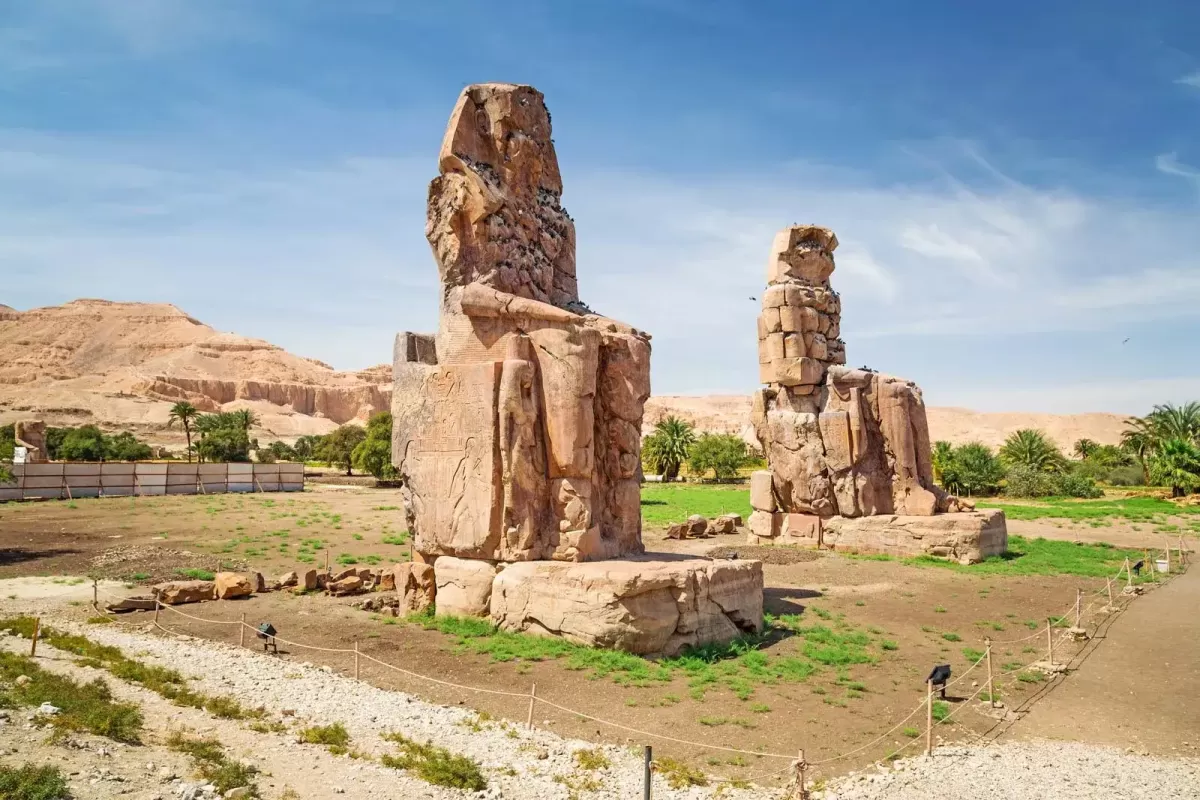
Why Are They Called the Colossi of Memnon?
“Memnon” is a name tied to Greek and Roman times. Visitors from those periods linked the statues to Memnon. In Greek stories, Memnon is a legendary ruler and hero.
The story spread even more after reports that one statue made a strange sound at dawn. Several ancient writers said they heard it. Those accounts helped draw attention to the statues.
Even now, the label Colossi of Memnon is still used a lot. Yet the statues truly depict Pharaoh Amenhotep III.
What Can You See at the Colossi of Memnon?
Going to the Colossi of Memnon is not only about viewing two huge statues. You also get a look at Amenhotep III’s mortuary setting and at the work done by artisans in ancient Egypt. While you walk around, pause for the cuts made in the stone. Try to picture what the original temple could have looked like when it was still whole.
The Two Giant Statues
Your first stop should be the two seated statues of Amenhotep III. They show the ruler seated on a throne, posed in a way that matches royal rules. His arms rest down at his sides, and his posture stays steady.
These figures were made from big stone blocks. They were meant to feel like a clear message about the king’s role and power. The size was not an accident. The makers chose it to stress how important the pharaoh was.
Check the stone near the figures. You can make out parts of the throne, along with writing and smaller people linked to the king and his family. Even with so many years of sun, wind, and rain, several of these marks are still there.
Amenhotep III
These statues show Amenhotep III, a key ruler from Egypt’s 18th Dynasty. Many scholars link his time in power with wealth, large building work, and strong links for politics and trade.
The makers likely wanted the king to look huge and untouchable. Put at the entry to his mortuary temple, the statues would have stood out as people came near the site.
Details and Ancient Inscriptions
You can also see hieroglyphs and carved patterns near the statues. The text names the ruler and lists his roles. It also points to why the monument mattered in worship.
The carvings are valuable examples of ancient Egyptian art and help visitors understand how writing, religion, and royal imagery were combined in monumental architecture.
.png "Partner")

.png "Partner")
.png "Partner")

.png "Partner")