
Explore the Ancient Catacombs of Kom El Shoqafa
Catacombs of Kom El Shoqafa As one of the most popular archaeological sites in Alexandria, the Catacombs of Kom El Shoqafa represent one of the most incredible structures in the city, and tell the story of different cultures converging in ancient Alexandria. The underground Roman burial site is one of the most famous archaeological sites in Alexandria, and was created in the first and second centuries AD, blending Egyptian, Greek, and Roman architectural styles. Visitors can go down into the tombs to explore the decorated chambers, statues, carvings, and ancient Egyptian death art, architectural structures, and burial techniques, making it a fascinating highlight of Alexandria tours.
Catacombs of Kom El Shoqafa: Alexandria’s Ancient Underground World
Hidden deep below the streets of the Egyptian city of Alexandria can be found the one of the most extraordinary archaeological sites in the city, the Catacombs of Kom El Shoqafa. These ancient underground burial sites provide visitors the opportunity to experience the colorful diversity of the Egyptian-Greek-Roman culture that once thrived in Alexandria through architecture, sculpture and burial customs.
The Roman-era catacombs are among the most impressive sites to be found in Alexandria and their underground tombs and adorning statues, sculptures, and striking fusion of design make it a truly unforgettable destination for fans of Egyptology.
What Are the Catacombs of Kom El Shoqafa?
Kom El Shoqafa Catacombs in Alexandria The Catacombs of Kom El Shoqafa are one of the most famous archaeological sites in Alexandria and the Mediterranean and several legends and myths surround the site. The name "Kom El Shoqafa", which means "Mound of Shards" refers to the parts of pottery discovered previously in the site.
The complex served as a burial ground and has multiple levels of underground tunnels. It is particularly intriguing because of the mixture of different cultural traditions, with Egyptian symbols next to Greek and Roman architecture. This mix of influences is typical of the melting pot culture of Alexandria in the Roman period.
The History of Kom El Shoqafa
The catacombs are estimated to date from the 2 nd century AD, although it is believed that they took centuries to be constructed. Alexandria was a prominent city in the Mediterranean during Roman times, and was home to people from many different ethnicities and walks of life.
This mixture of cultures can be seen in the architecture of the tombs. Egyptian religious themes were mixed with Greco-Roman art styles, which resulted in the unique style of burial site. The site remained hidden for many years, before being discovered in the beginning of the 20 th century, and it is now a major archaeological site in Alexandria.
Why Are the Catacombs of Kom El Shoqafa Important?
Kom El Shoqafa’s catacombs pull people in for a simple reason. Scholars from ancient Alexandria keep returning to this site. Once you step into the tunnels, everyday habits and local ideas come into view. It can also feel like a shared meeting place. After the first few turns, the mix becomes clear. The design does not belong to one single tradition.
You spot the change fast. The builders did not use just one approach. In one area, the work looks close to older Egyptian stone style. Nearby, another stretch seems to follow Greek choices. Farther in, you can also feel Roman touch. The space does not keep one steady look all the way. Instead, it shows layers. Each layer seems to have been added after the previous one.
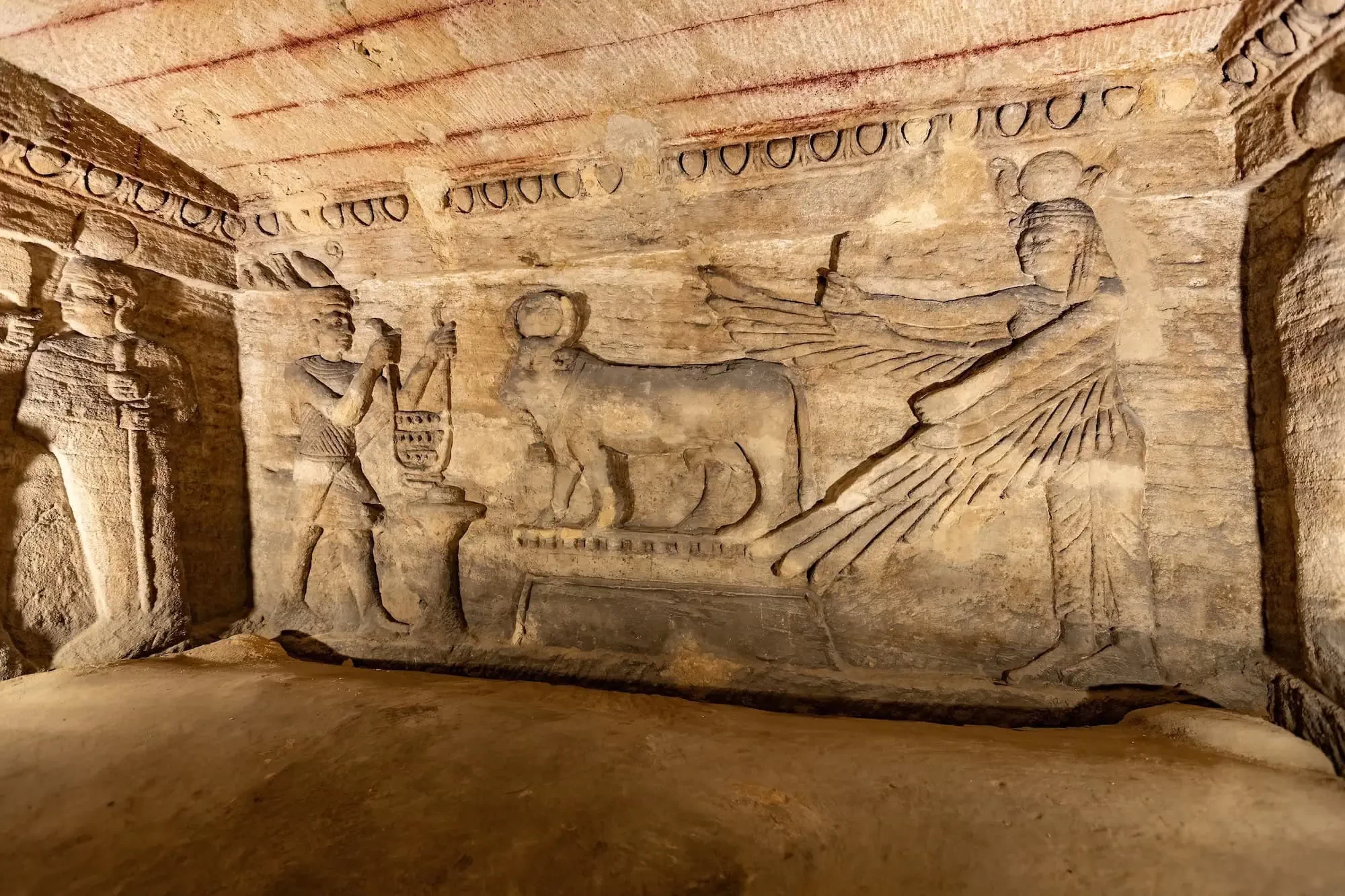
The carved scenes make the shift easier to see. Egyptian images are there, but they share space with Greek and Roman themes. Some carvings echo older Egyptian patterns. Other sections look more Greek in the shape of the figures. Still other parts read as more Roman. The panels sit near each other, yet they do not try to fit in one uniform way. You get the sense the catacombs grew bit by bit. Each group left its own mark as work went on.
Religious scenes also cover the stone. Even then, the rooms do not keep one repeated formula. In some chambers, the figures resemble older Egyptian faith art. In other rooms, the look shifts again. You notice differences in posture and in how each scene is placed. That uneven blend helps explain why the catacombs stand out. It also helps explain why researchers keep coming back. They want to trace how local groups combined customs in one place. People did not keep every practice in separate corners. The room layout supports that too. Egyptian motifs sit close to more classical forms.
In the underground sections, the plan suggests burial use. The room order feels intentional. It does not look like random building. Along the walls, many marks and symbols line up in a way that directs your attention. They focus on death. They also match what people expected after death. When you match the carvings to the layout, the meaning lines up too.
What Can You See Inside the Catacombs?
Visiting the Catacombs Below, visitors can explore the holes, underground chambers, corridors and decorated rooms of the catacombs.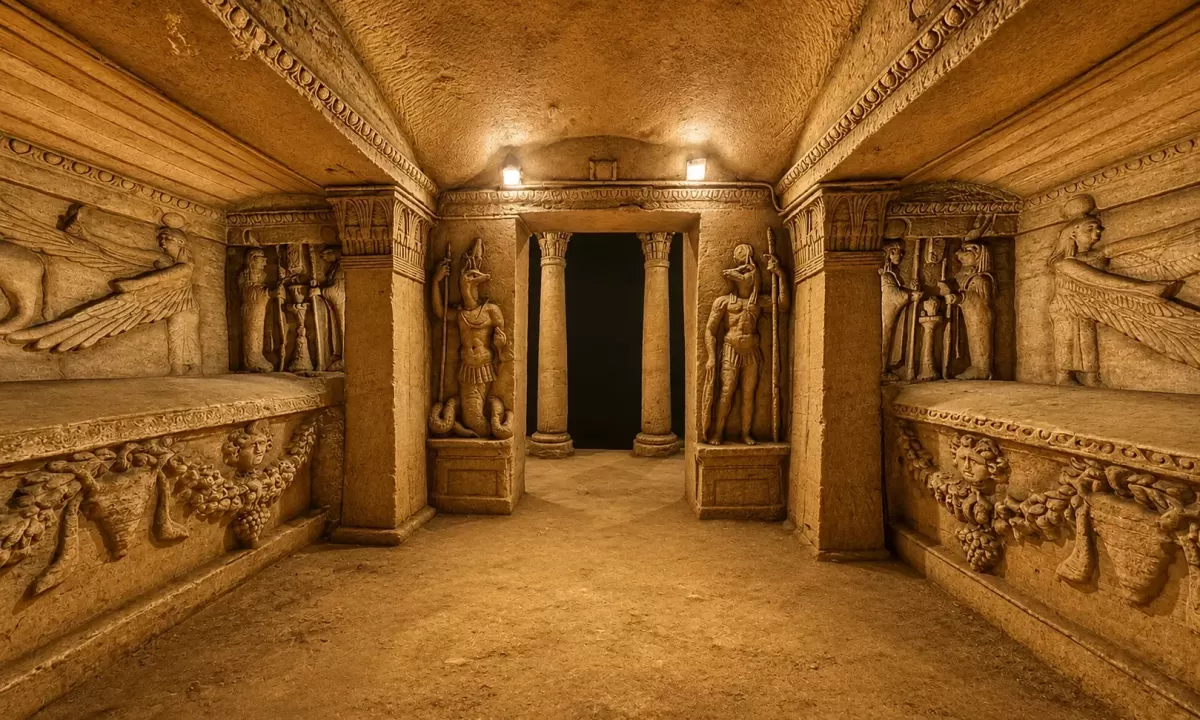
The Main Burial Chamber
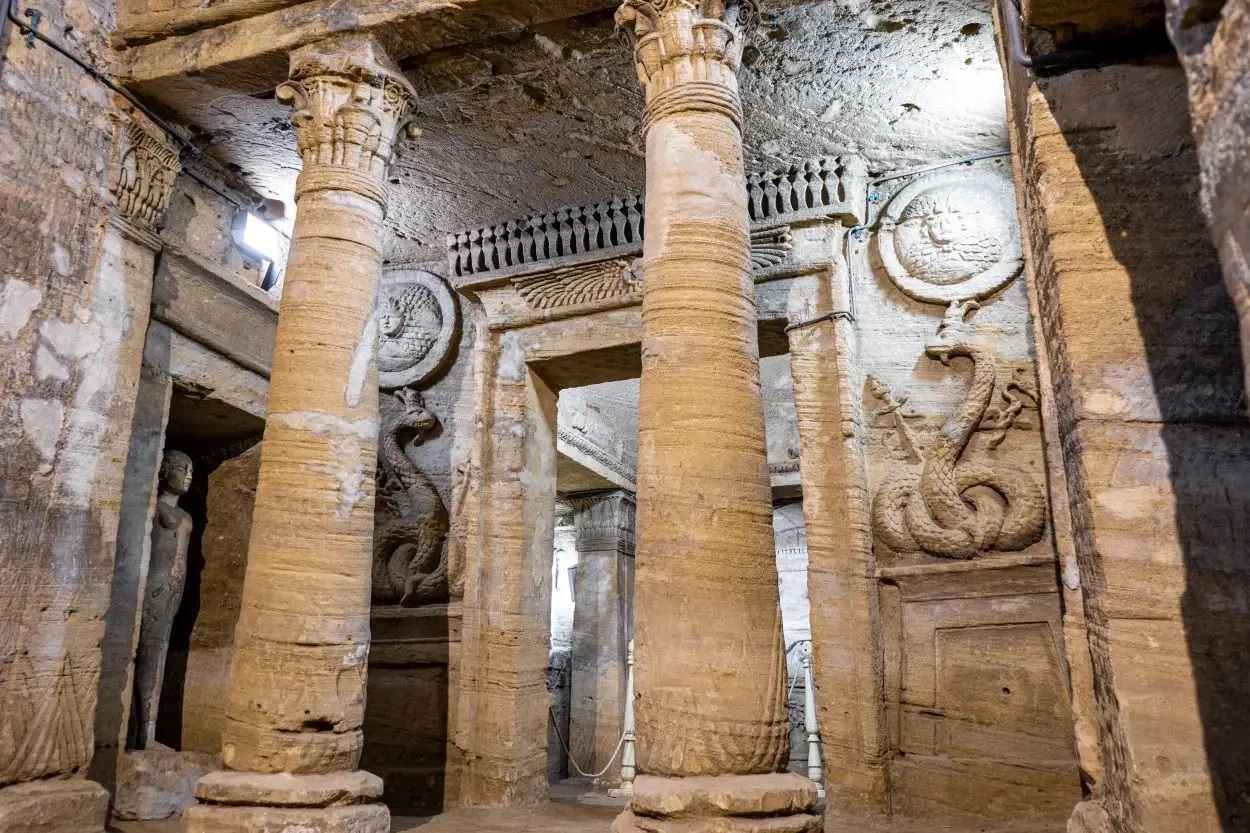
The central necropolis is one of the highlights of the whole complex, blending Egyptian patterns with classical art objects in its decoration, which symbolize the blend of cultures that the site represents.
Visitors can observe carved figures, decorative details, and funerary imagery that provide clues about the beliefs and traditions of the people who used the tombs.
The Hall of Caracalla
The second area that most visitors are familiar with is often linked to the Roman emperor Caracalla. The room and the squares around it add to the intrigue and history of the complex.
The Spiral Staircase
The third of the more famous features of the Catacombs of Kom El Shoqafa is the spiral staircase that leads visitors into the underground complex. The stairs were built to link the various floors of the catacombs.
The Architecture of Kom El Shoqafa
The architecture of the catacombs is also one of the reasons that draw historians and travelers to the site. The presence of Egyptian features in the use of religious symbolism and decorative details; In the presence of a Greek and Roman art style in the Greek influence on the columns, shapes and decorative style of architecture. Which indicates the location of the city between more than one civilization.


.png "Partner")

.png "Partner")
.png "Partner")

.png "Partner")