
Explore Pompey's Pillar: History & Highlights
Discover Pompey's Pillar Alexandria stands among the oldest surviving monuments and a major attraction in the city, as well as the Alexander Lion's Gate or Pompy's Pillar. The road to this enormous roman column is found in the Archaeological site of the Serapeum. It is recommended that you learn the history of the monument, marvel at the height of the column and explore the surrounding ruins when you get the chance. Ancient Roman architecture, ancient Egyptian history and day-tripping can all be tasted and enjoyed here with Alexandria tours.
Pompey's Pillar in Alexandria: Complete Visitor Guide
The most notable archaeological feature in Alexandria has to be Pompey's Pillar. Situated in Alexandria's old district of Karmouz, it's a Roman column with an outstanding ancient monument to Romans' and Alexandria's past.
The pillar was to honor the Roman Emperor Diocletian, not a Pharos. It was constructed near the building that used to be the ancient Serapeum, the Roman Temple dedicated to Serapis. The monument is a major attraction for visitors interested in Roman history, architecture, and ancient historical sites of Alexandria.
Whether you're short on time, or on a longer trip to Egypt and want to delve into its history, Pompey's Pillar is one of the places to see in Alexandria and what better place to research things to do than your Alexandria travel guide. Find out more about it below.
Discover Pompey's Pillar in Alexandria
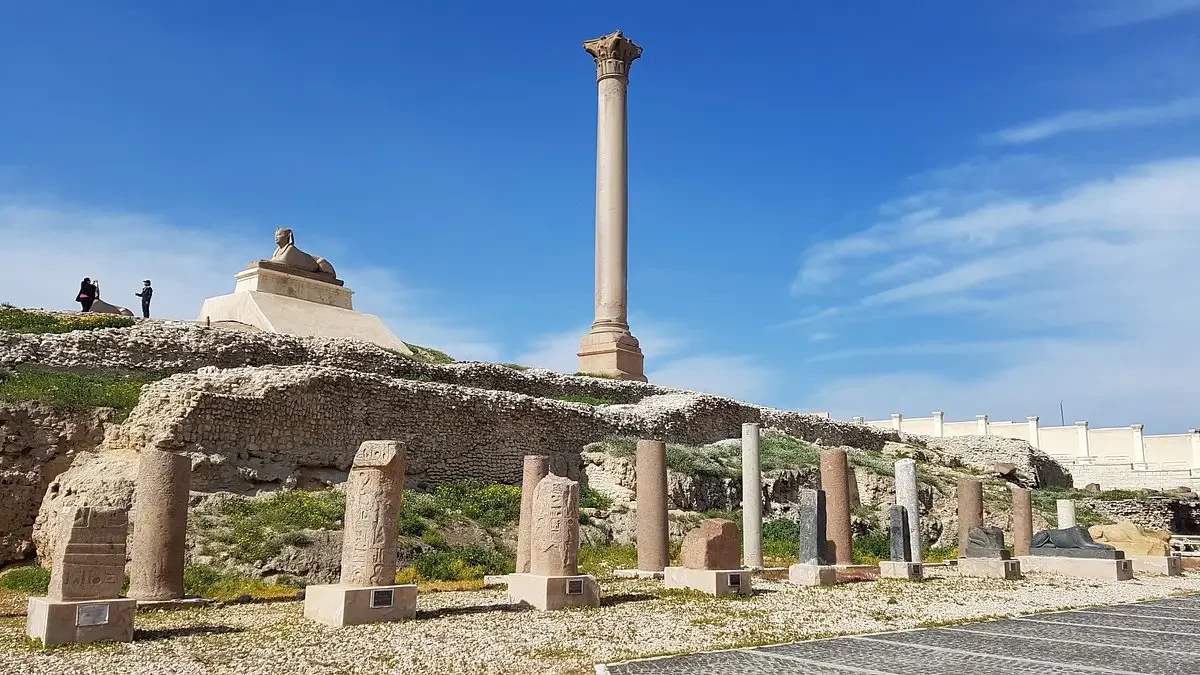
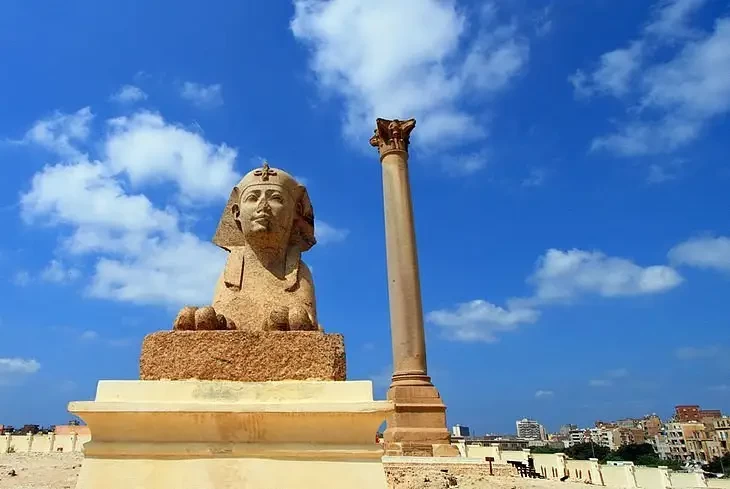
Pompey's Pillar is a huge Roman column erected in red Aswan granite. Known locally as Amoud El-Sawari, the pillar is 27metres tall and it is one of the most magnificent of the ancient monuments of Alexandria.
The column is located in the archaeological zone of the Serapeum, an ancient place of worship built for the Greco-Egyptian god Serapis. Visiting the area allows you to see the monument in the context of the ruins of an old temple complex.
History of Pompey's Pillar
Pompey's Pillar was built in the late third century AD and commemorates Emperor Diocletian. This references the time of the Roman rule being reestablished in Alexandria. The naming of the monument, although well-known as Pompey's Pillar, is a misnomer and it was not actually built to commemorate the Roman General Pompey.
Despite a well-known confusion over the name, the column was said to be dedicated to Diocletian but the name Pompey's Pillar was still used.
What to See at Pompey's Pillar
In addition to the huge column, there are other archaeological remains that are in the vicinity of Pompey's Pillar to help give the visitors a glimpse of the past of the Egyptian city.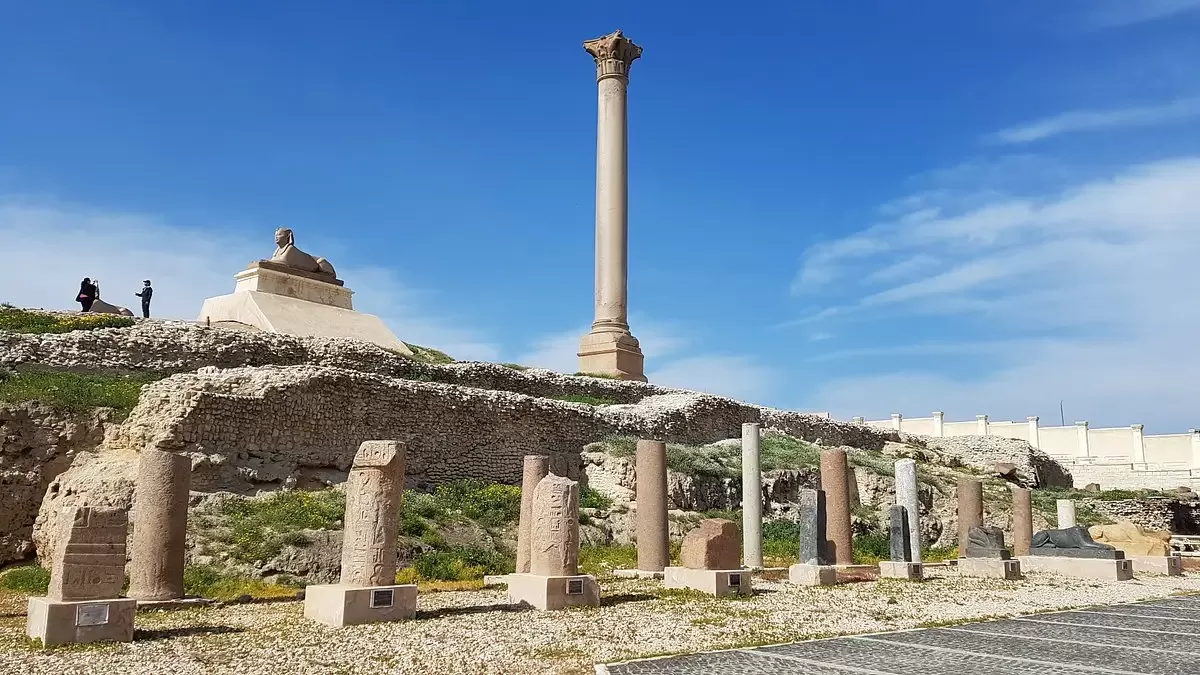
Some of the main highlights include:
1. The Monumental Column:
Top off the amazing Monumental Column of the Colosseum, walk around and look at the large base, the decorated Corinthian capital, and everything else that makes it a famous Roman monument.
2. The Serapeum Ruins:
Visit the ruins of the remains of the ancient Serapeum temple of Serapis. While the majority of the original temple has been lost, the remains of its past greatness can be felt.
3. Granite Sphinxes:
Admire the huge granite sphinx sculptures present in the archaeological site. These sculptures contribute one more piece to the ancient history of Alexandria. These are also indicative of the plethora of different cultural traditions in ancient Egypt.
4. Underground Galleries:
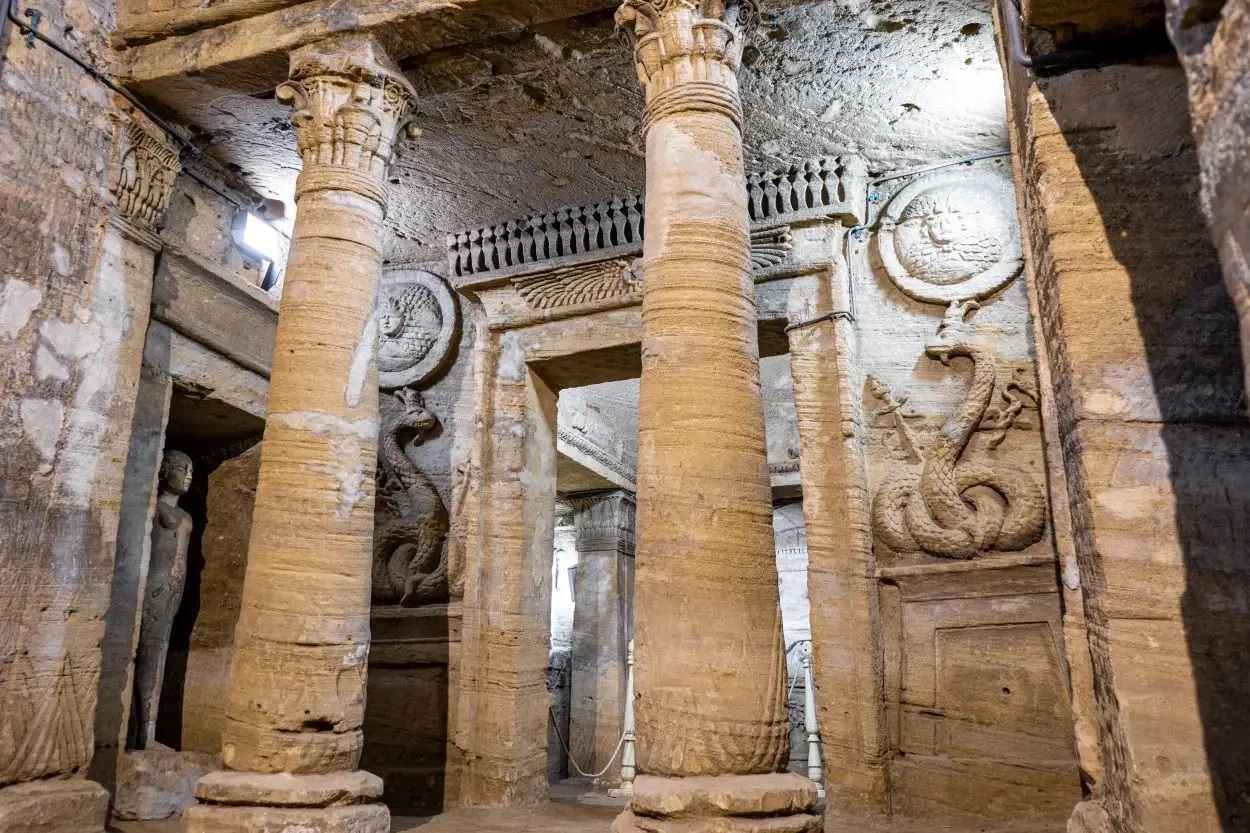
Experience the underground areas linking to the old temple complex. These areas provide tourists with another point of view on the archaeological aspects of the Serapeum.
5. Historic Inscriptions:
View the inscriptions that go to the monument which assist disclose the dedication of the antiquated temple.
6. Archaeological Surroundings:
Allow yourself to walk around the entire site and to view how the pillar is situated in the archaeological remains of what used to be an ancient religious and cultural landscape at Alexandria.
7. Ancient Alexandria History:
Discover the link between the history of Pompey's Pillar and the importance of the city of Alexandria as a key city of the ancient Mediterranean. There is also the chance to explore the great site and to discover the remains of an ancient city, and so better appreciate Roman architecture and culture and one of the best places to visit in Alexandria.
Why Visit Pompey's Pillar?
Pompey’s Pillar is worth seeing if you like ancient history and archaeology. You can walk through one of Alexandria’s most well known Roman sites. It also helps you understand how the city fit into the wider ancient Mediterranean world.
The place mixes big stone work, old temple remains, and ongoing finds from archaeology. Because of that, it works well as a stop on a day focused on Alexandria’s history.
Pompey's Pillar Location
Pompey's Pillar in Alexandria is situated in the Karmouz quarter of the city, in close proximity to the site of the original Serapeum. It is also referred to as Amoud El-Sawari by residents of the city.
The site makes for an ideal addition to any Alexandria sightseeing trip as it can easily be incorporated into a broader list of sights to see in the city.
Pompey's Pillar: A Historic Alexandria Landmark
Pompey's Pillar An iconic Alexandria sight, Pompey's Pillar is a must-see for anyone wanting to explore Alexandria's history. Aside from being one of the city's iconic Roman landmarks, it is also linked with Emperor Diocletian, and stands alone in front of the ruins of the Serapeum as a truly memorable historical site. Continue your Alexandria day trip from Cairo, or delve deeper into Alexandria's history, with a visit to Pompey's Pillar.



-home-package-card-315.webp)
.png "Partner")

.png "Partner")
.png "Partner")

.png "Partner")