
Temple of Hatshepsut: History & Travel Tips
The Temple of Hatshepsut stands on the west bank in Luxor. It is one of the sights people usually plan around when they visit. This place was made for Queen Hatshepsut. She is known as one of ancient Egypt’s strongest women rulers.
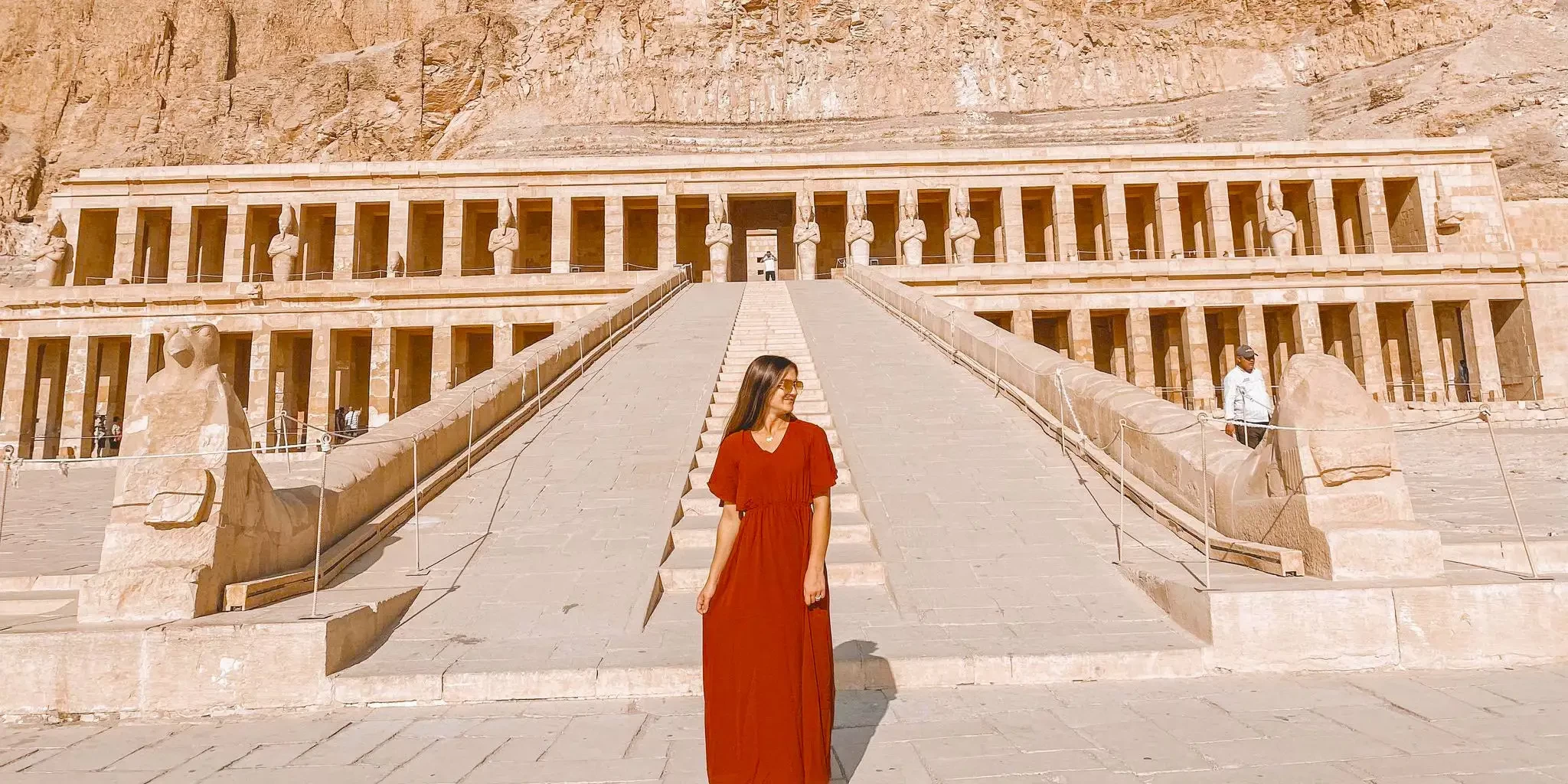
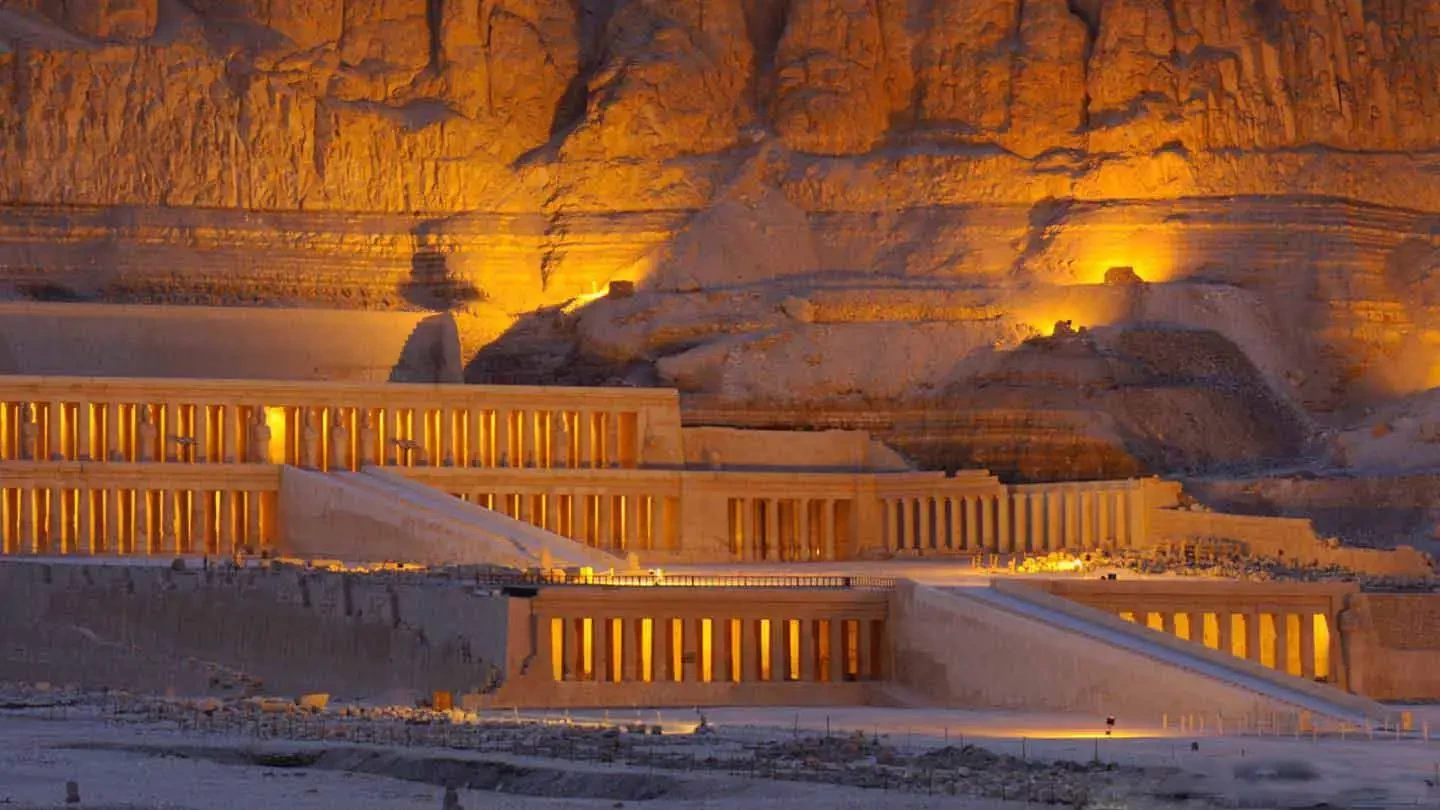
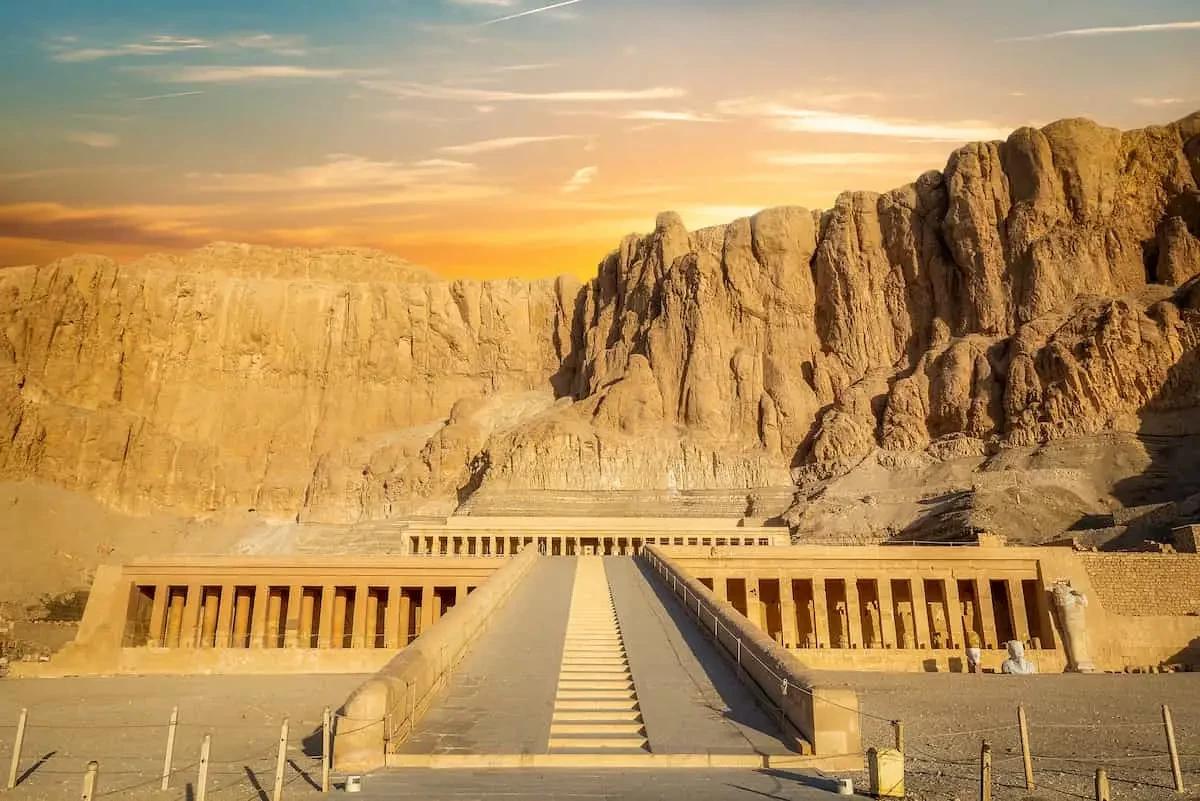
The temple looks impressive right away. You see wide terraces that step up the cliff face. You also notice tall columns. Stone reliefs cover many walls with fine detail. The setting adds to the effect too. The temple sits under the rock cliffs at Deir el-Bahari.
When you walk through, you get a clear sense of her time as queen. The carvings show what she believed and how she ruled. They also point to key efforts of her reign, including trade journeys. You can feel the focus on gods and worship in many scenes.
This guide brings together the basics you need. It covers the temple’s background. It highlights the main parts you should not miss. It also explains the layout and key building traits. Finally, it shares visitor tips so you can plan your day at one of Luxor’s best known historical sites with Luxor tours.
Temple of Hatshepsut: Complete Guide
The Temple of Hatshepsut stands out among ancient sites in Egypt. It is also a top stop for visitors on the west bank of Luxor. You can spot it near the steep cliffs of Deir el-Bahari. The layout has terraces at different levels. There are long rows of columns. You will also see statues and carvings that show scenes in fine detail.
This temple was built for Hatshepsut. She ruled as a pharaoh in ancient Egypt. She is often described as one of the strongest women to take the throne. Her time in power is linked with trade and major building work. It also included strong focus on religious life. Now, the temple helps guests understand her reign. It also adds to the view of Luxor’s famous archaeological area.
If you are planning a trip to Luxor, this complete guide covers the history of the Temple of Hatshepsut, what to see, how to plan your visit, and practical tips for exploring the site.
Where Is the Temple of Hatshepsut?
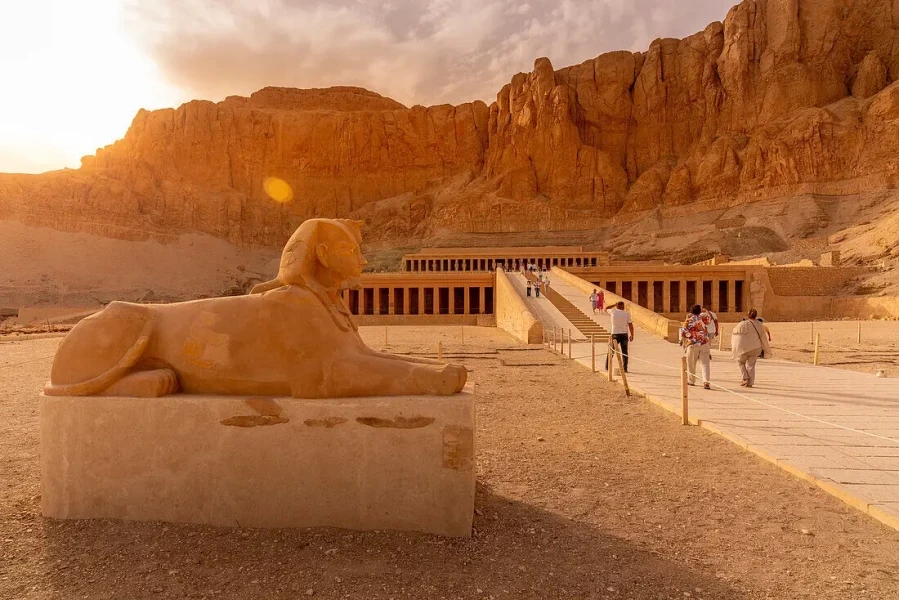
The Temple of Hatshepsut stands at Deir el-Bahari. You can find it on the west bank of the Nile, in Luxor. The temple is set against a natural limestone cliff. That backdrop gives it a strong and striking look.
It is also near several major archaeological places. The Valley of the Kings is nearby, and so are the Colossi of Memnon.This makes it easy to include in a West Bank sightseeing itinerary.
Who was Hatshepsut?
Hatshepsut was one of ancient Egypt’s well known female rulers. She rose to the role of pharaoh in the 18th Dynasty. Her rule is part of the New Kingdom period.
She did not act like a short term ruler. She showed herself as a real pharaoh with full authority. She ordered large building work. She also supported Egypt’s economic and religious goals.
Her time in power is linked to a well known trading trip to the Land of Punt. Scenes from this trip appear in relief work at her temple.
History of the Temple of Hatshepsut
The Temple of Hatshepsut was built in the 15th century BC. It served as a mortuary temple for Hatshepsut and for the gods connected to her.
Senenmut is the name often linked to the work. He had a close role with Hatshepsut. The layout is not like many other temple plans. Here, the temple climbs upward in steps. Those steps form terraces that sit right against the cliffs at Deir el-Bahari.
The builders meant for the site to link daily life to the sacred setting of the hills and rock nearby. Even so, time took its toll. Some areas were worn down. Some were changed. Other parts were left without care. Repairs over the years have saved many key elements.
Temple of Hatshepsut Architecture
When people arrive, the layout stands out at once. You do not find one large doorway leading into enclosed rooms. Instead, the temple stretches across several levels. Ramps tie the terraces together.
You can also see a mix of features in the view. Straight edges, columns, terraces, and the tall rock walls all work together. The effect is bold and easy to recognize.
The design also reflects the importance of the landscape itself. The limestone cliffs behind the temple form a natural backdrop that makes the monument particularly memorable.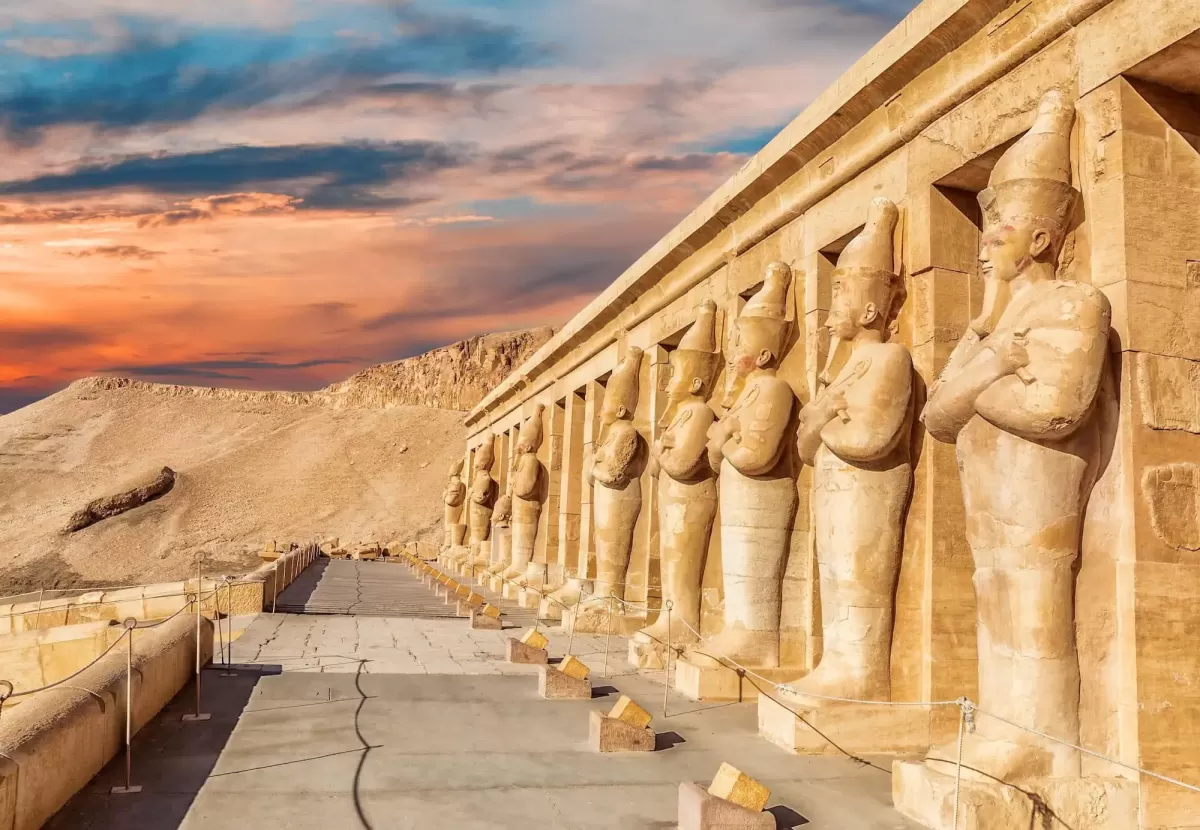
What to See at the Temple of Hatshepsut
There are several highlights that should be included in your visit.
The Terraces
The temple has three main terraces. People notice them first. Each terrace has columns, statues, small chapels, and carved display areas.
If you walk up from level to level, you start to see how large the monument is. You also get a clear look at the layout. At the same time, you can watch the land around it.
The Colonnades
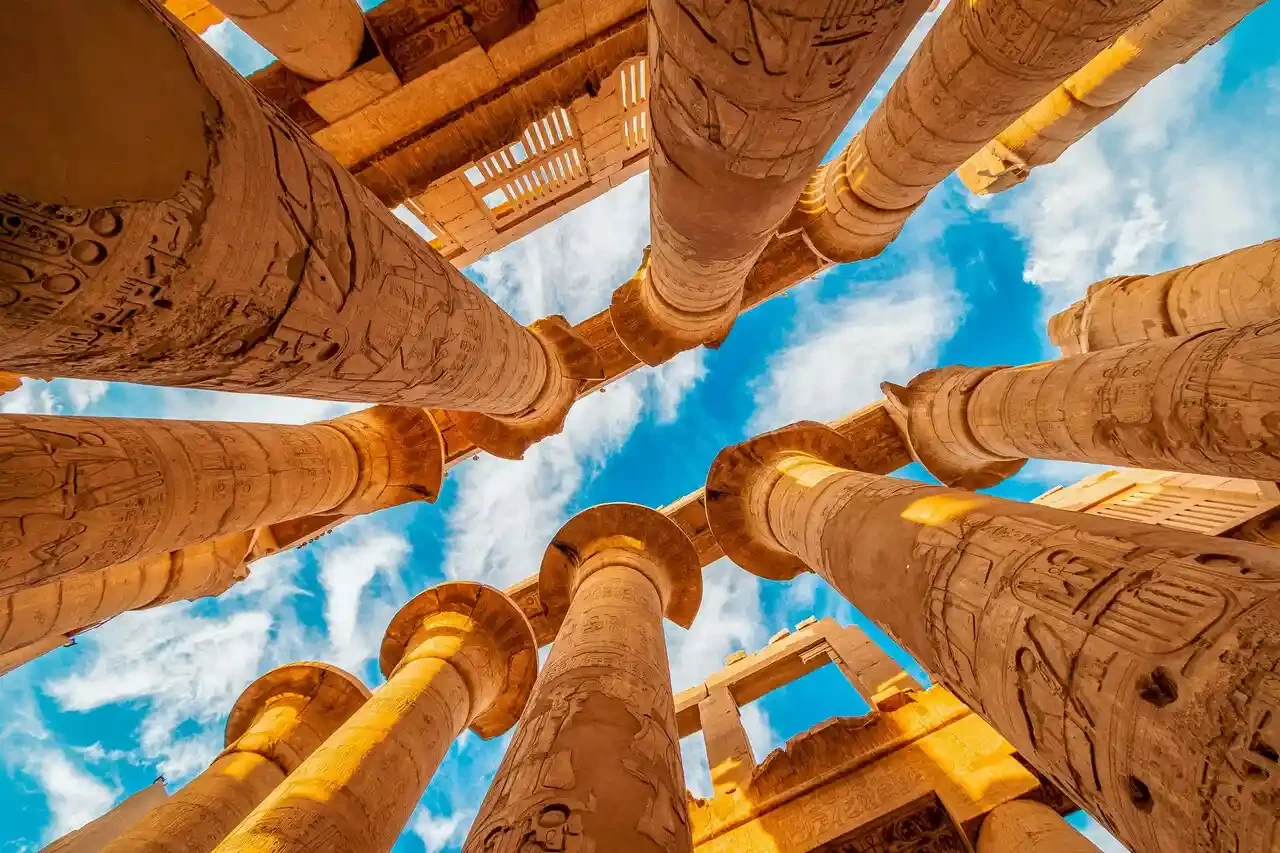
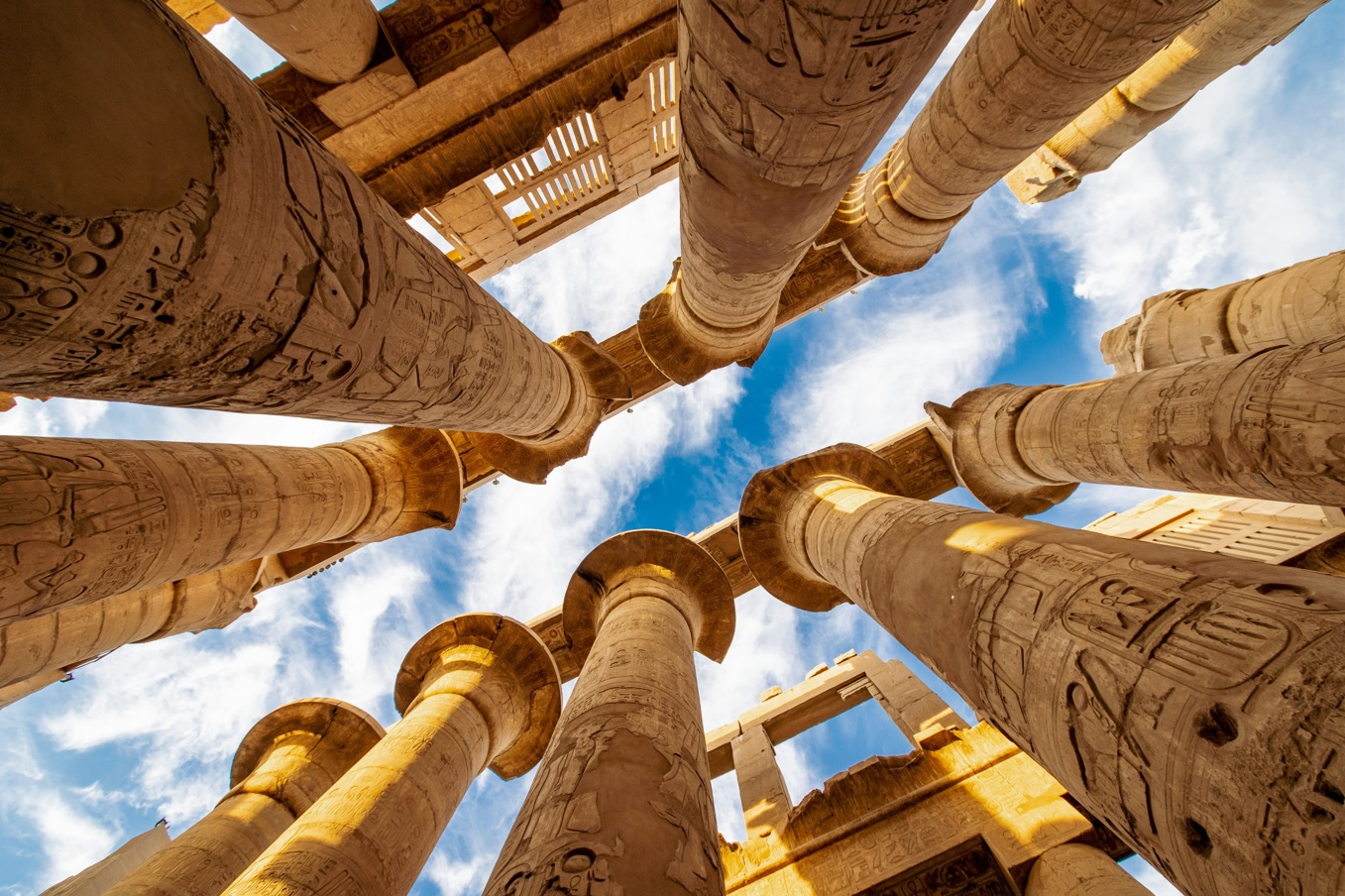
Inside the temple there are long lines of columns. Many of them have relief carvings and written marks. These parts give visitors key details about Hatshepsut’s time. They also point to religious ideas and how she is tied to the gods.
Some carved scenes show rites and offerings. Other carvings focus on major events from her rule.
Reliefs of the Land of Punt
One famous wall in the temple has carved scenes about Hatshepsut’s journey to Punt.
In those pictures, boats and travelers stand out first.
You can also spot animals in the same views.
There are plants shown too, along with many things that look like goods for trade.
Taken together, the art gives a sense of how Egypt reached beyond its own lands.
Chapel of Hathor
Within the temple, there is a small chapel set aside for Hathor.
She is known as an important goddess in Egypt and is tied to care, music, affection, and protection.
The painted walls and panels present her in a way that feels easy to remember.
For that reason, visitors who care about early Egyptian worship often want to pause here.
Sanctuary of Amun
Near the top of the temple stands a sanctuary set aside for Amun. Amun was one of the key gods in ancient Egyptian worship.
This spot was more than a room. It was a holy zone, and it shows how serious the temple was about religion.
Why Is the Temple of Hatshepsut Important?
The Temple of Hatshepsut is worth study for a few clear reasons. First, it stands out as a strong example of ancient Egyptian building work. At the same time, it also helps tell what life was like under a major queen.
The wall carvings share details about how people practiced faith. They also point to royal events and to trade. They even reflect Hatshepsut’s push to be accepted as a ruler.
The site also shows a link between stone work and the natural setting. Ancient Egyptians worked with the landscape, not against it, to make large lasting architecture.
-home-package-card-315.webp)
.png "Partner")

.png "Partner")
.png "Partner")

.png "Partner")